

What is Toll Processing?
Toll processing is a particle size reduction and separation service offered by Prater Industries for companies needing product-market testing, emergency production, product development, or ongoing production for those who do not wish to undertake the financial commitment for equipment or labor.
Important Features
Key features of Prater Testing and Tolling include:
- Testing supported by measurement of raw materials and processed goods utilizing the most recent methodologies available, including Malvern laser diffraction particle-size analysis
- Customers’ operational process is precisely reproduced to exact operating protocols
- Strict adherence to customers’ process goals
- Private labeling and repackaging is available
Testing
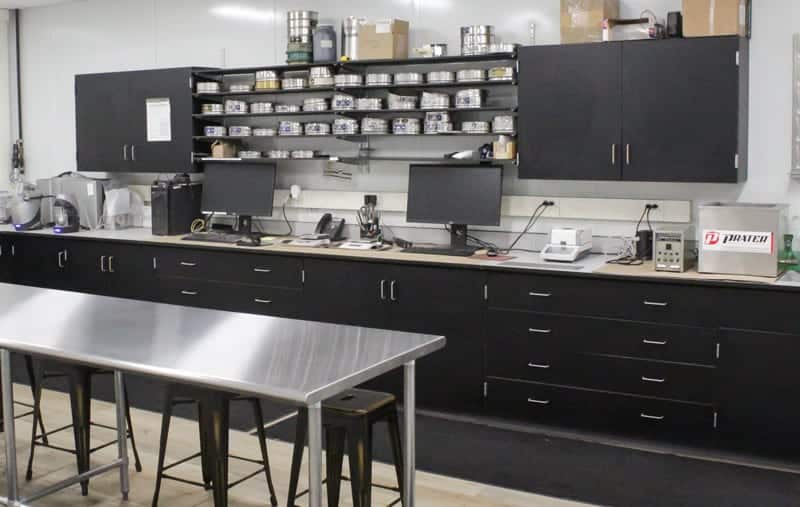
The Prater test lab represents a solid foundation upon which to serve our customers. Our global experience and the knowledge gained from our wide variety of products and services are combined with a high degree of personal attention to fully support the development of innovative, specifically tailored material size reduction, separation, and process solutions. We meet with our customers and mutually discuss their process goals to determine the appropriate equipment for meeting their objectives.
Prater testing and tolling equipment include:
- Rotary airlock valves
- Lump breakers
- Hammer mills
- Mega mills
- Fine grinders
- Classifier mills
- Centrifugal (Rotary) sifters
- Vibratory (Deck) screeners
- Air classifiers
- Rotormills
- Rotordryers
- Compactors
- Briquetters
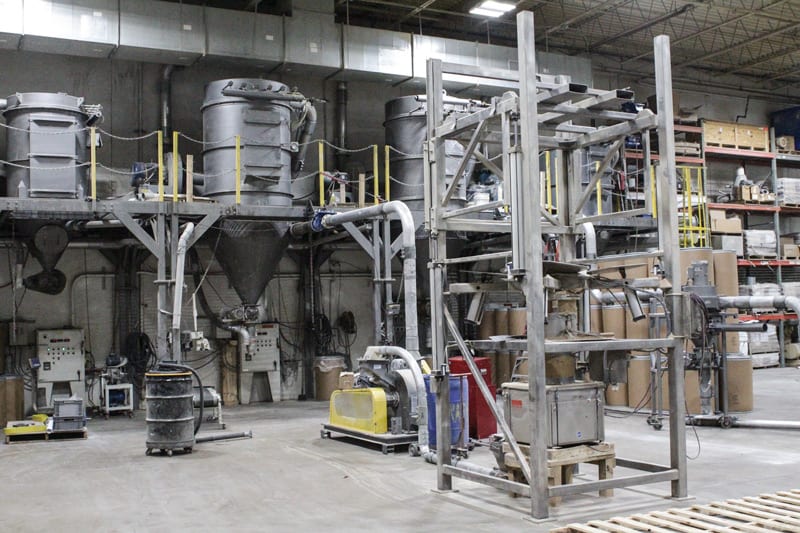
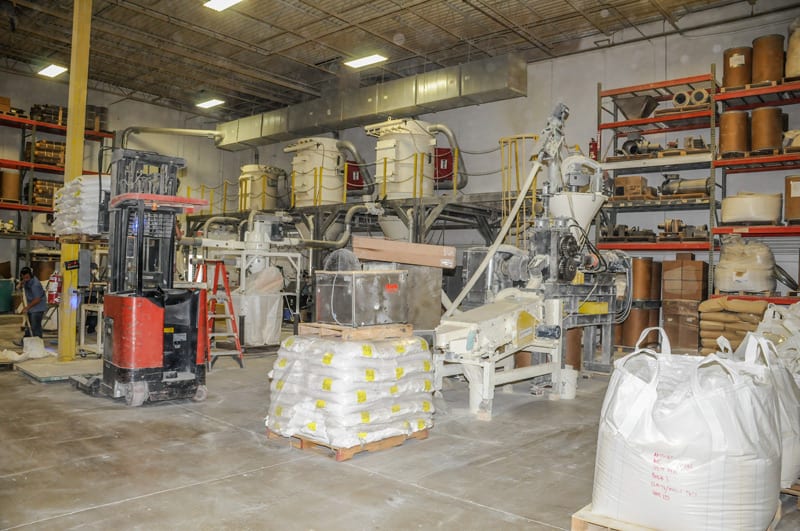
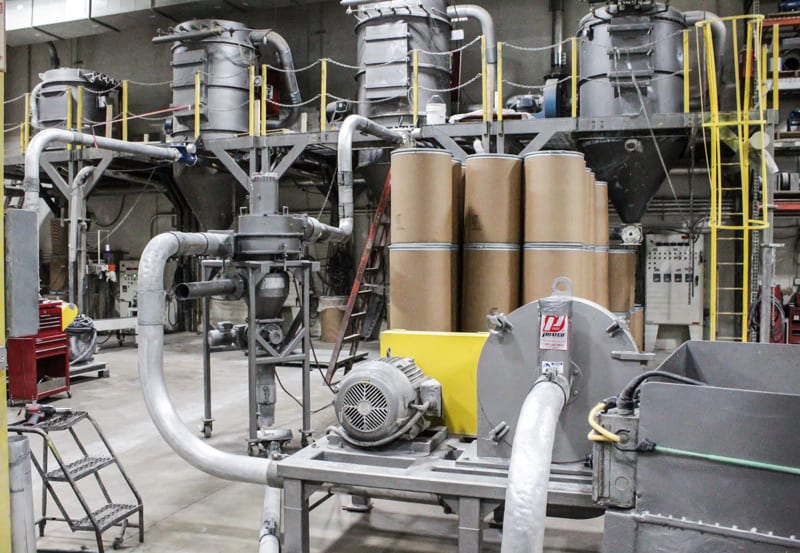
In addition to Prater equipment, we have vibratory and screw feeders, shredders, explosion protection equipment, and dust collectors that give us the ability to simulate pneumatic production environments. Our analytical lab utilizes a variety of particle-analysis methods to verify our results and direct testing toward the customer’s stated needs. Our methods include standard screen analysis as well as modern laser diffraction analysis.
Prater’s Test/Toll Laboratory Offerings
We are pleased to offer service for the following:
- Coarse Grinding
- Fine Grinding
- Air Classification/ Fine Material Separation
- Delumping/ Product Conditioning
- Screening and Separation
- Compacting and Briquetting
In Addition To Size Reduction, We Can Provide:
- Drying
- Mixing
- Coating
- Blending
The laboratory is equipped to perform moisture testing and manual or automatic laser size analysis on both ground and unground material.
More on Toll Processing
Test Lab Gallery


Frequently Asked Questions
What is toll processing in bulk material manufacturing?
Toll processing is a service where a specialized processing company performs operations such as grinding, milling, classification, or blending on raw materials supplied by a customer. The service allows manufacturers to process materials without investing in new equipment, facilities, or technical staff.
When should a manufacturer use toll processing services?
Manufacturers often use toll processing when they need to test a new product, scale production quickly, or process materials temporarily while upgrading their own facilities. It can also be used when specialized equipment or expertise is required for particle processing.
What types of processes can be performed in a toll processing facility?
Typical toll processing capabilities include coarse and fine grinding, air classification, screening and separation, delumping, compacting, briquetting, and particle analysis. Additional services may include blending, drying, coating, or mixing, depending on the application.
How does Prater validate particle size and processing results?
Prater’s toll processing laboratory uses analytical techniques such as screen analysis and laser diffraction particle size measurement to evaluate raw and processed materials. These tests verify particle size distribution and ensure the process meets the customer’s specifications.
What industries benefit from toll processing services?
Toll processing services support industries such as food processing, chemicals, pharmaceuticals, minerals, agriculture, and other bulk solids manufacturing sectors that require precise particle size reduction, separation, or conditioning.