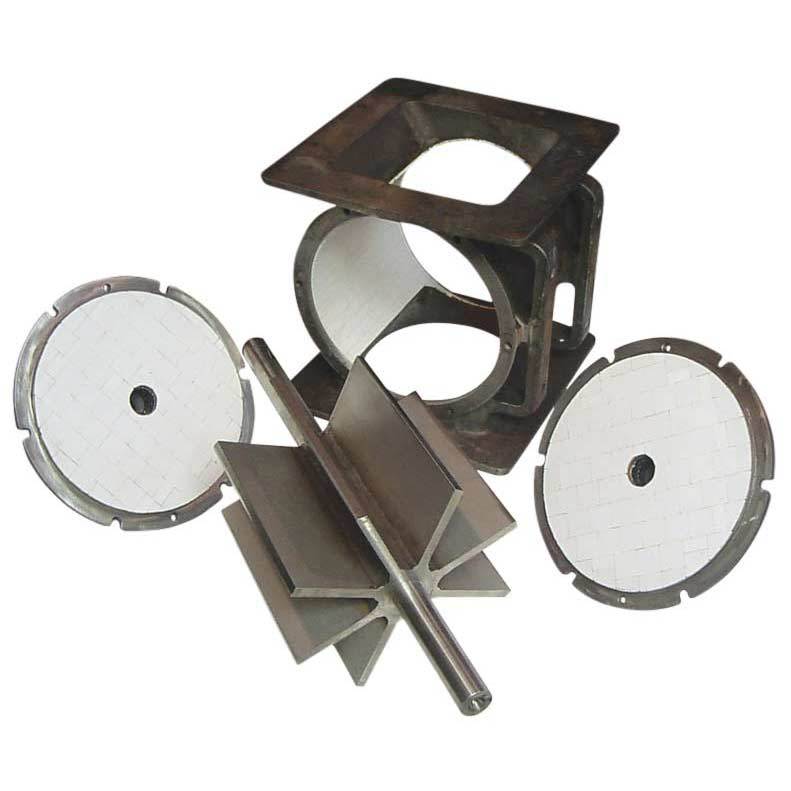
Abrasion-Resistant Rotary Airlock Valve for Extreme Wear Applications
Bulk materials such as minerals, alumina, sand, pigments, and abrasive powders can rapidly wear down conventional rotary valves, leading to air leakage, process inefficiencies, and frequent maintenance shutdowns. The Prater Abrasion-Resistant Rotary Airlock Valve is engineered to maintain performance in these demanding conditions by combining heavy-duty construction with specialized wear-resistant materials.
The valve’s cast-iron housing and end plates are ceramic-lined with alumina wear surfaces, protecting critical components from erosion while maintaining the tight clearances required for effective air sealing. This design helps preserve rotor tolerances longer than standard cast-iron or stainless steel airlocks, reducing maintenance frequency and extending equipment life.
Available in sizes ranging from 6 to 16 inches square, the abrasion-resistant valve features eight-blade rotors, sealed outboard bearings, and Prater’s self-adjusting packing glands. It can operate at temperatures up to 300°F and pressure differentials up to ±12 PSI, making it well-suited for demanding bulk material handling and pneumatic conveying systems.
By combining durable materials with precision machining, the valve helps processing systems maintain consistent flow rates, minimize air leakage, and withstand abrasive materials that quickly degrade conventional airlock valves.
Request a Custom Quote
Share your requirements, and our engineers will deliver a customized recommendation with pricing and lead times.
FEATURES:
Cast Iron Rotary valve Construction
Ceramic-lined rotary valve body and end plates
Square inlet & round outlet
Universal flanges allow for custom-drilled flanges to your pattern
(2) Sealed outboard bearings – lubricated for life
Easily handles highly abrasive or corrosive products
Temperatures up to 300°F
Up to +/- 12 PSI pressure differential
Stainless construction available
Chain drive gear-motors
Our abrasion-resistant rotary airlock is considered our most durable rotary valve and is your solution to rotary airlock valves that constantly wear out in high abrasive applications. Our special treatment processes allow our abrasion resistant rotary airlock valves to withstand even the most abrasive and corrosive products and applications. They achieve better performance with less maintenance than other rotary valves on the market.
LAST LONGER AND REDUCE COSTS
Prater Abrasion Resistant Rotary Airlock Valve is the preferred choice for highly abrasive or corrosive products. The rotary airlock’s ceramic lined cast iron housing achieves better performance than airlocks made of solely of cast iron, stainless steel, or Ni-hard. The thick-wear layers of alumina ceramic coating throughout the airlock maintains the rotary valve’s precision tolerances and provide long wear life. Other features include an over-sized mounting flange, Heavy-duty outboard bearings, self-adjusting packing glands (a Prater Exclusive), and pre-drilled end plates for air purge.
The Ceramic Series Rotary Airlock ensures up to +/- 12 PSI pressure differential and up to 300°F. Constructed from either cast iron or stainless steel, the Ceramic Series valve is fully equipped with eight-blade rotors with your choice of speed and square sizes of 6, 8, 10, 12, 14, and 16 inches. Its heavy cast iron houses an over-sized mounting flange, heavy-duty outboard bearings, self-adjusting packing glands (a Prater exclusive) and pre-drilled end plates for superior air purge. Additionally, ceramic options include ceramic-lined endplates, ceramic-lined rotors, and tungsten carbide throat. Options include ceramic lined endplates, ceramic lined rotors, and tungsten carbide throat.
Prater ceramic airlocks reduce maintenance costs and help avoid losses in production, all the while achieving higher efficiency by holding our tighter tolerances longer. When heavy-duty just is not enough, our Ceramic Series is the proven solution to rotary airlocks that wear out in high-abrasive applications.
Frequently Asked Questions
Why are ceramic liners used in abrasion-resistant rotary airlock valves? Ceramic liners provide significantly higher resistance to abrasion than standard cast iron or stainless steel. By protecting the housing and end plates from erosion, the ceramic surfaces help maintain the precise rotor-to-housing tolerances required for effective air sealing and long service life.
How does abrasive wear affect airlock valve performance? When abrasive materials erode the housing or rotor tips, internal clearances increase. This can cause air leakage, reduced pressure control, inconsistent feed rates, and premature component failure in pneumatic conveying systems.
What materials typically require an abrasion-resistant rotary valve? Highly abrasive powders such as alumina, carbon products, minerals, pigments, and certain chemical compounds can rapidly wear conventional airlocks. Abrasion-resistant valves are designed specifically to process these materials without frequent component replacement.
What options are available to further extend wear life in abrasive environments? Optional wear-protection upgrades can include ceramic-lined rotors, ceramic end plates, and tungsten carbide throat components, which provide additional protection in applications involving extremely abrasive or high-velocity materials.
How does an abrasion-resistant airlock improve system reliability? By maintaining tight internal tolerances and protecting critical surfaces from wear, the valve reduces air leakage, stabilizes material flow rates, and minimizes unexpected downtime in bulk solids processing systems.
NOT SURE WHAT SIZE AIRLOCK YOU NEED?
Try our Airlock Size Recommendation Tool: answer a few simple questions and we’ll provide a recommendation on what size airlock to use.
The abrasion-resistant series rotary airlocks valves are available for almost every free-flowing dry material application and notable for significantly improving performance with the following: